Stop Using AI

(At least with your lawyer.)

AI is very useful but…

The allure of AI is undeniable. I present to lawyers—locally and nationally—about the expanding role AI will play in the legal profession.

But when something feels “too good to be true,” it usually is.

And while we’re still in the early days of the AI boom, we already know many of the pitfalls. Here’s one you may not be considering:

Using AI in your communications with your lawyer may be costing you more money than you think.

The pattern we’re seeing

More and more, clients are communicating with us through AI.

We can usually tell right away: the traditional font, the bolded subject headers, the tidy bullet points—and the tone. And in these emails (the length of which tends to be unmanageable), clients use AI to “explain” the law to us.

The problem is: these AI platforms always (and we do mean, always) steer clients in the wrong direction.

Most of the time, the “law” cited is just plain wrong.

For example, I asked ChatGPT to list the custody factors in Pennsylvania. It missed them.

Not most of them—all of them.

It created new custody factors, ignored the real factors, and tried to tell me I was wrong.

Why AI gets it wrong (even when it sounds right)

AI tools (including ChatGPT, Claude, Copilot, and many others) do not know the law.

That’s a dangerous combination in a legal case where every move has a consequence.

The hidden cost: you pay for the cleanup

Attorneys spend three years in law school learning the law—but, more importantly, learning how to analyze it, synthesize it, and use their education and skills to represent you. They spend the rest of their careers sharpening those skills, building relationships, and learning how to navigate the legal system.

There is so much more to the practice of law than just the words in the Rules. The practice of law involves understanding the courts and our clients—and knowing how to strategize and plan to our clients’ advantage.

The documents AI drafts are nearly always wrong: they cite imaginary or incorrect rules, and they summarize the law incorrectly.

When this happens, we must spend hours:

AI isn’t saving you time.  It’s creating more work—and more costs—for you.

A better way to use AI (without letting it misdirect you)

We understand why clients turn to AI.

Legal jargon is confusing. The process can feel mysterious and frustrating. Continuing to find ways to conserve costs and better understand the legal process is commendable.

However, relying on AI as “truth”—or using it to guide your attorney’s strategy—is not advisable.

The costs are high:

If you’re using AI, tell your lawyer

Be open with your lawyer about your use of AI.

We already know you’re using it.

Help us understand what you’ve read and what concerns you—so we can better help you.

Talk to us so we can enhance how we represent you, using our experience, our education, and the relationships we have built with other lawyers, the court—and with you.
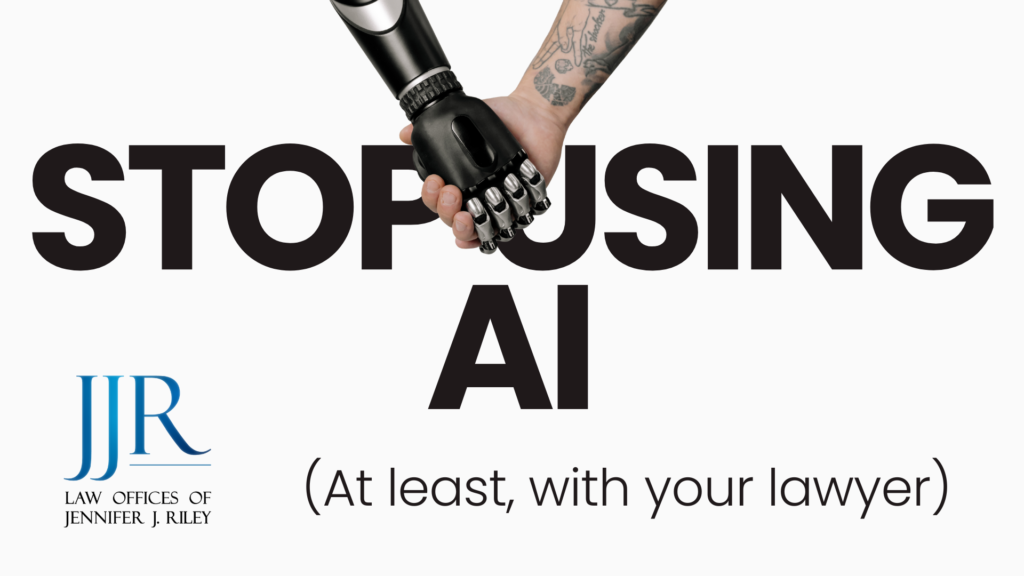
Human and robotic hands shaking above the words "Stopping AI" to illustrate why AI legal advice should not replace advice from an experienced Pennsylvania family law attorney.

New Pennsylvania Law: PFA Orders for Pets

by Amanda M. Atkinson, Esq.

A PFA for your Pet? Protection from Abuse Orders will now include companion animals.

House Bill 1210 (HB 1210) was signed into Pennsylvania law on November 18, 2024. The amendment is an attempt to address the link between domestic violence and animal abuse by providing additional relief for survivors and their pets. The act implements two important changes to Title 23 (Domestic Relations) of Pennsylvania Consolidated statutes. First, it expands Protection from Abuse Orders to include protection for companion animals. Second, it allows the protected party to be granted temporary ownership of the companion animal.

In Pennsylvania, a Protection from Abuse (PFA) Order is a court order designed to protect victims of domestic violence from abuse by a family member, household member, intimate partner, or someone with whom they share a child. It can prohibit the abuser from contacting or approaching the victim, and may also include temporary custody arrangements or exclusive possession of a shared residence.

Because domestic abusers often abuse or threaten to abuse pets, many survivors hesitate or feel they cannot escape the situation as they worry for the animal’s safety. Prior to HB 1210, Pennsylvania’s Protection from Abuse statute only listed plaintiffs or minor children as parties to be protected by Protection from Abuse Orders. While the statute includes “persons who have a significant relationship with the victim” in the definition of abuse victims, animals have never been included.[1] The amendment now will allow Protection from Abuse orders to protect “the plaintiff [or], minor children or companion animal”.[2] The inclusion of companion animals will direct perpetrators of violence to refrain from harming not only the plaintiff, but any companion animal listed in the protection order.

Not only does the order include language that demands the abuser not harm the pet, it also can grant the Survivor temporary ownership rights of the companion animal. Survivors will be able to take and advocate for the companion animal without worry of the abuser trying to reclaim the companion animal. The act specifically directs abusers “ to refrain from possessing, contacting, attempting to contact, transferring or relocating the companion animal or contacting or entering the property of any person sheltering the companion animal.”[3]

The implementation of this act may allow domestic violence survivors to feel safer leaving or reporting their abuser knowing that their pet can be provided protection too.

While this act is intended to support domestic abuse survivors, it also impacts family law. Though many of us consider pets to be members of the family, Pennsylvania law considers them personal property.[4] As a result, this can complicate domestic violence situations if the abuser can argue ownership of the pet or if pets must be divided as property during divorce proceedings. In a divorce, property is usually split equitably between parties in a process called Equitable Distribution where courts will determine who retains what marital property if the parties cannot come to an agreement. Courts make these determinations by considering factors such as each parties’ economic circumstance, length of the marriage, and the value of the property.

HB 1210 shifts the treatment of pets from property to a more custody-like consideration. Courts can consider evidence of abuse or threats towards pets in determining which party should retain the animal after the divorce. If a survivor is considering or preparing for a divorce action, planning for their pet’s safety as well is crucial. It is important to work with experienced family law attorneys who can help survivors navigate the inclusion of their pets in divorce proceedings.  While the act does not go into effect until January 17, 2025, it is likely that moving forward the recognition of emotional bonds between parties and pets will be a stronger factor in property and divorce proceedings.


[1] 23 Pa. C.S. § 6102

[2] HB 1210, 2024 Gen. Assemb., Reg. Sess. (Pa. 2024).

[3] Id.

[4] 3 Pa. Stat. § 459-601